

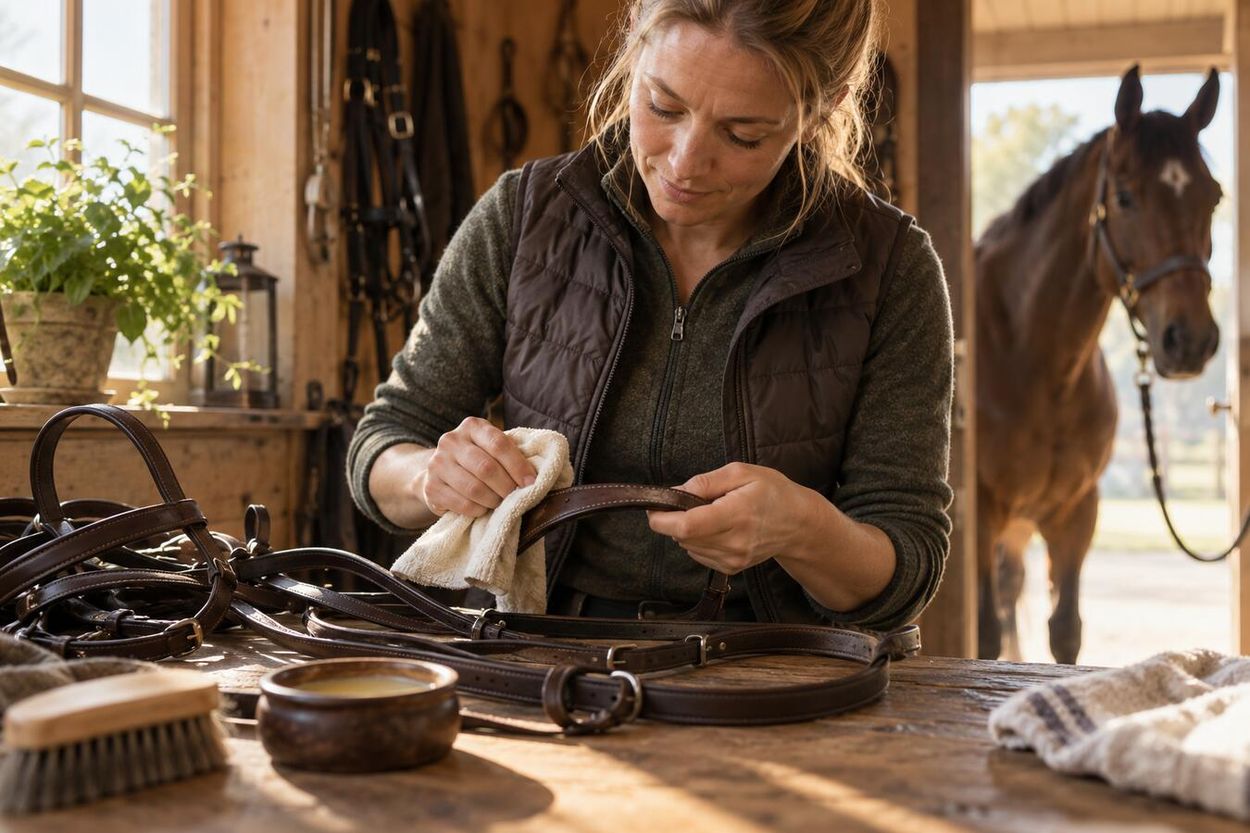
Leather bits for horses – function, fit and care
A leather bit has a different surface and feel from a metal bit. With correct use and care, the leather may soften and gradually adapt, but the material does not automatically make a bit mild. Mouthpiece shape and thickness, cheekpieces, size and the rider’s hand still determine the overall action.
When might leather be relevant?
Leather may be an option for horses that react to metal contact or prefer a different surface. Pain, sores or sudden changes in behaviour should be investigated before trying a new bit.
Fit and size
The bit should not pinch the corners of the mouth or slide excessively from side to side. Assess the width together with the cheekpiece design.
Care
- Clean gently after use.
- Allow the leather to dry naturally, away from strong heat.
- Use only care products suitable for something placed in a horse’s mouth.
- Inspect the leather, stitching, core and attachments regularly.
- Stop using the bit if it has cracks, sharp edges or structural damage.
Are leather bits always softer?
No. Pressure is also affected by thickness, construction and rein use. A thick bit may take up too much room in a small mouth.
Learn more
Explore ByLynga horse bits · Compare bit materials · Visit the Bit Academy
Key points
- Start with oral health, anatomy and correct fit.
- Assess width, height, thickness, mouthpiece and cheekpieces as one system.
- Change only one important factor at a time where possible.
- Stop using the equipment if there are wounds, pain or clear distress.
How to evaluate in practice
- Record the current equipment and the horse’s response.
- Check teeth, oral tissues, bridle and bit.
- Test changes first in a calm, safe environment.
- Observe bridling, swallowing, contact, steering and behaviour.
- Check the corners of the mouth and oral tissues after riding.
Frequently asked questions
Is there one solution for every horse?
No. Oral anatomy, training, the rider’s hands and intended use vary. Individual fit is decisive.
How long should a change be tested?
If the horse is comfortable and safe, several short sessions provide better evidence than one trial. Stop immediately if pain or injury appears.
When is professional help needed?
Consult a veterinarian for wounds, swelling, sudden behavioural change or suspected dental problems.
Rules and safety
For competition, always check the latest rules of Horse Sport Ireland and the FEI TackApp where applicable. A product name alone does not prove eligibility.
General information does not replace an individual examination. Last fact-checked: 7 September 2026.