

Kimblewick Bits
Kimblewick bits have fixed D-shaped cheeks and, depending on the model, different rein positions. On an Uxeter design, slots hold the rein at a defined level; a lower position can increase rotation and potential leverage.
Explore ByLynga Kimblewick bits with different mouthpieces, materials and sizes. Consider the mouthpiece, curb chain, fit and the individual horse’s response when choosing a model.
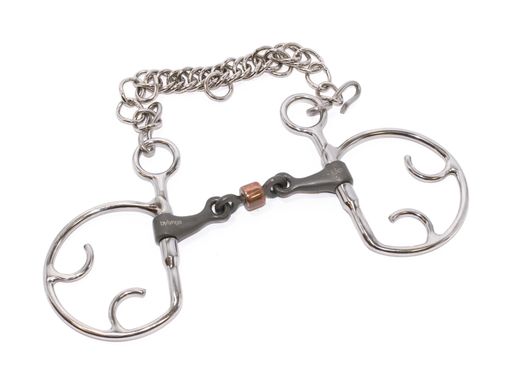
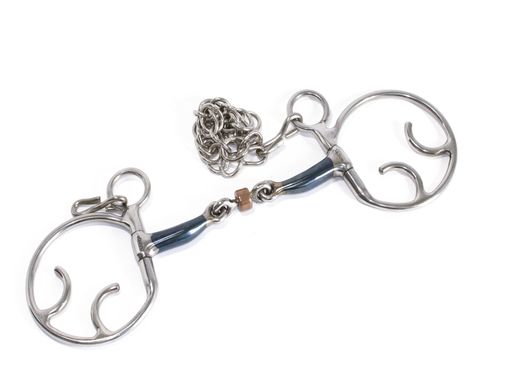
What is a Kimblewick bit?
A Kimblewick has D-shaped cheeks, an upper cheekpiece attachment and usually a curb chain or strap. Slotted models allow the rein to be attached at different heights.
Action and rein position
A lower rein position may increase rotation and potential leverage until the curb chain limits movement. Mouthpiece, cheek proportions, chain adjustment, fit and the rider’s hand determine the overall effect.
Kimblewick or Pelham?
A Pelham normally has separate rein rings for two rein functions. A Kimblewick is more compact and is generally ridden with one rein on each side.
Fit and rules
Check width, height, curb chain and clearance around the cheeks. Competition permission depends on the discipline, level and current rules.
Read the complete guide: Kimblewick bit – action, Uxeter slots, curb chain and history.