Hanging cheek snaffle – action, poll pressure and history
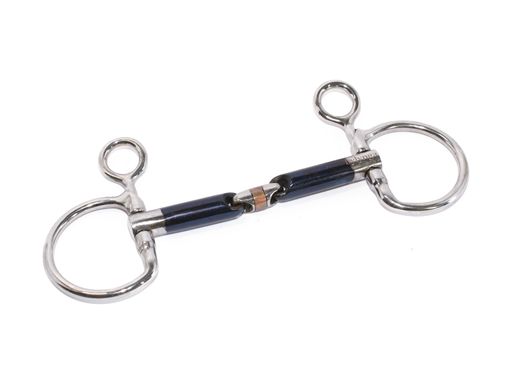
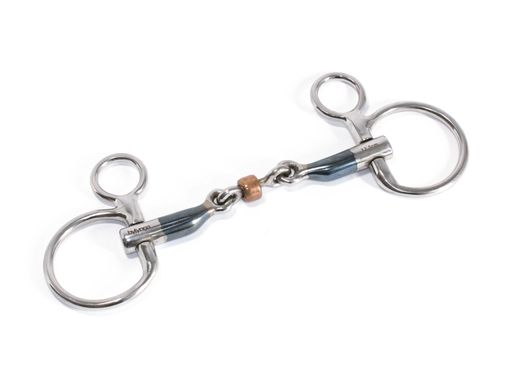
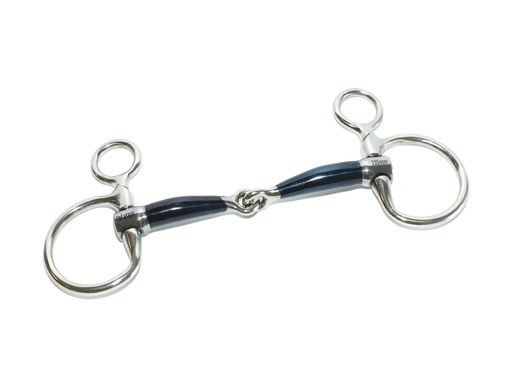
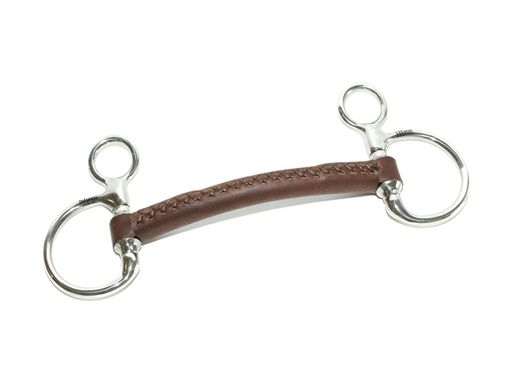
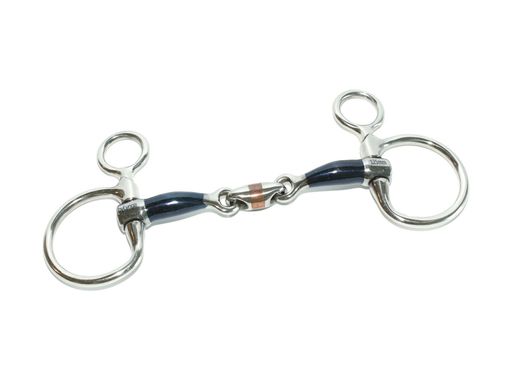
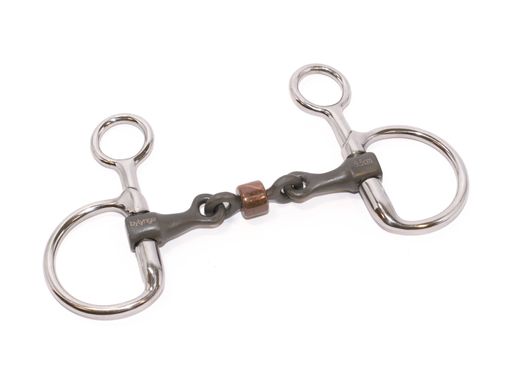
A hanging cheek snaffle, also known as a Baucher bit, has a small upper ring for the bridle cheekpiece and a larger ring for the rein. This arrangement holds the cheek in a defined position and provides more stability than a loose ring snaffle. But does it create poll pressure, does it provide leverage, and which horses may prefer it?
A bit’s overall action is never determined by the cheek alone. Mouthpiece shape and thickness, width, bridle adjustment, rein use and the horse’s oral anatomy must be considered together.
How is a Baucher bit constructed?
The cheekpiece attaches to the small upper ring and the rein to the larger main ring. The mouthpiece sits below the cheekpiece attachment, but there is no lower shank attachment or curb chain of the type found on a Pelham.
The suspension limits some rotation and helps keep the mouthpiece centred. Some horses prefer this steadier position; others are more comfortable with the movement of loose rings.
Does a hanging cheek snaffle create leverage?
A standard Baucher with the rein attached to the main ring does not produce the same form of leverage as a Pelham, Kimblewick or curb bit. Those designs use a larger distance between bridle and rein attachment and often a curb chain or strap that limits rotation.
The upper section may look like a short shank, but appearance alone does not make its mechanics identical to a curb. It is more accurately described as a stably suspended snaffle.
Does it put pressure on the poll?
Conflicting simplified explanations are common. One traditional account says that the upper ring automatically increases poll pressure when the rein is used. Other mechanical descriptions and measurements made by bit manufacturers suggest that cheekpiece tension may decrease in some test arrangements.
The available information does not justify promising one pressure pattern for every Baucher, bridle and horse. Proportions, friction, mouthpiece, bridle adjustment and rein direction all affect the result. The bit should therefore not be marketed as guaranteed to increase or reduce poll pressure.
What can be stated more confidently is that its suspension provides different stability from loose rings. This is usually the more useful distinction when choosing a bit.
Who was François Baucher?
François Baucher lived from 1796 to 1873 and became one of the most influential and controversial French riding masters of the nineteenth century. His Méthode d’équitation appeared in 1842.
Following a serious accident in 1855, he developed a later, lighter approach to the aids, commonly described as his second manner. His ideas influenced French and academic riding traditions.
There is no clear surviving documentation showing that Baucher invented or regularly used the bit now carrying his name. He is frequently associated with double-bridle equipment. The connection should therefore be presented as a naming tradition, not a proven invention story.
Which horses may prefer a Baucher?
It may be worth considering when a horse appears unsettled by loose-ring movement, prefers the mouthpiece to remain more centred, or has previously gone comfortably in stable cheek designs.
It cannot guarantee a quieter contact or greater control. Dental problems, wounds, limited tongue room, unsuitable width, bridle or saddle fit, balance and training may all affect the response. Recurring discomfort should be investigated rather than masked with a stronger bit.
Is it suitable for a strong horse?
If a horse becomes strong while trying to avoid a moving or poorly fitted bit, greater stability may improve communication. If the cause is pace, balance, pain, fear or training, the cheek design does not solve the underlying problem.
Change one factor at a time and observe steering, swallowing, contact and possible signs of discomfort over several quiet sessions.
Straight, single- or double-jointed?
Baucher describes the cheek. The mouthpiece determines much of the contact. A straight or shaped unjointed mouthpiece moves as one unit, while joints permit different movement between the sides.
No version is automatically the mildest. Tongue, bars, palate, teeth, centre section, thickness and material all matter.
Size and correct fit
The mouthpiece should sit centrally and at the same height on both sides. The upper ring must remain free, and the cheek should not pinch or rub the face.
An overly wide bit may slide sideways and reduce the intended stability. A narrow one may compress the corners of the mouth. Check the fit both at rest and with light rein contact.
Competition use
Permission depends on discipline, level, mouthpiece, material, cheek construction and the current rules of the relevant governing body. Rules change and differ between federations. Always consult the latest official rulebook before competing.
Frequently asked questions
Is a Baucher bit strong?
Not because of the cheek alone. Mouthpiece, thickness, fit, rein use and the horse’s sensitivity determine the overall effect.
Is it a snaffle?
A standard Baucher lacks the lower shank and curb chain of a curb design and is commonly described as a stably suspended snaffle.
Can a pony use one?
Yes, provided the width, thickness and shape fit the pony and the design complies with any applicable rules.
Is a straight Baucher milder?
Not automatically. An unjointed mouthpiece moves differently from a jointed one, but suitability depends on the horse’s anatomy.
Does it require a special bridle?
A normal bridle is generally used. The cheekpieces attach to the small upper rings and must be adjusted symmetrically.
Compare Baucher and hanging cheek bits
Compare available mouthpieces, materials and sizes in the local Baucher category. For related options, read the comparison of Baucher, D-ring and full cheek snaffles.